
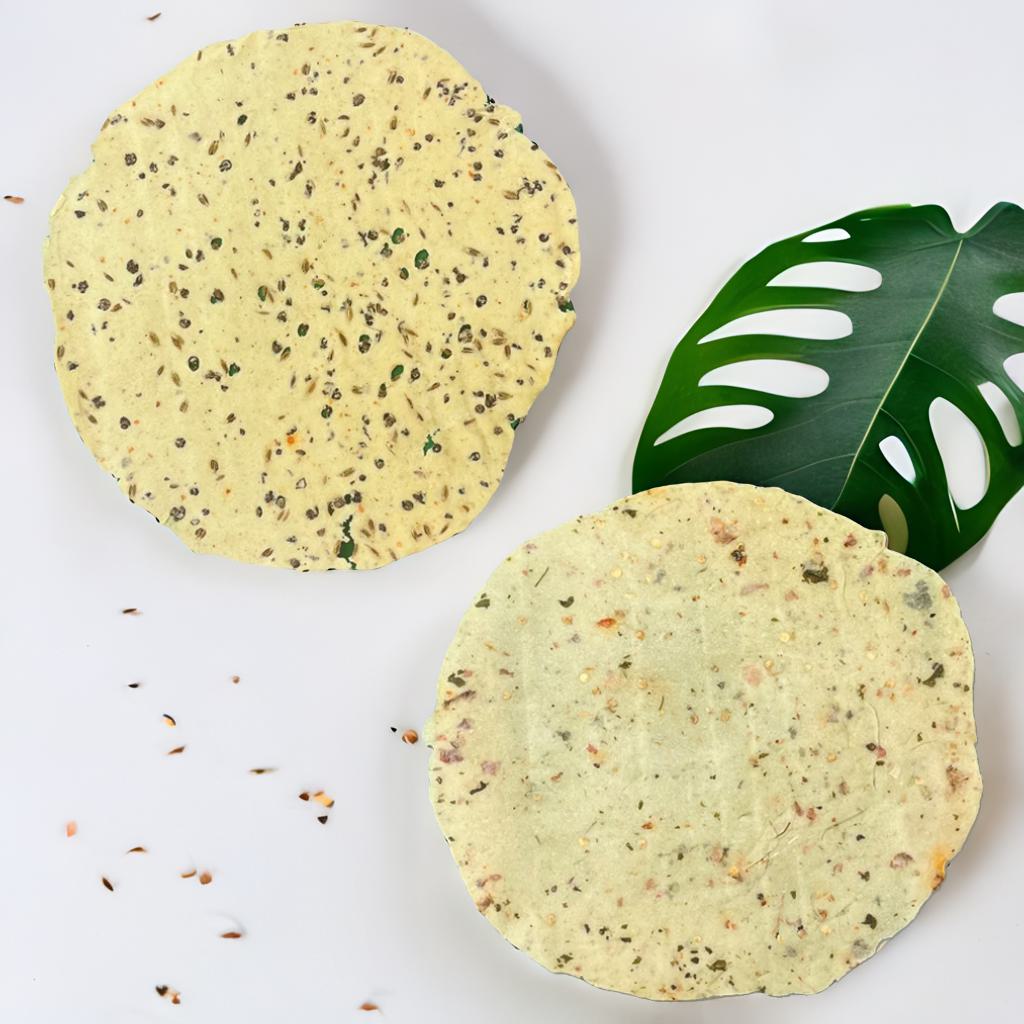
The Comprehensive Guide to Papad: India’s Favorite Crunch
Papad In the vast and diverse landscape of Indian cuisine, there is one element that unifies the North, South, East, and West: the Papad. Whether called Appalam in Tamil Nadu, Papadum in the West, or simply Papad in the North, this thin, crisp disc is an indispensable part of an Indian meal. It provides the necessary crunch to a texture-rich diet of soft rice, lentil soups (dal), and curries.
Below is an extensive guide covering everything you need to know about Papad, from its origins and ingredients to nutritional data and culinary secrets, presented in a detailed Question and Answer format.
Q1: What is the Papad?
Answer:
A Papad (also spelled poppadom, papadum, or appalam) is a thin, crisp, round flatbread from the Indian subcontinent. It is typically based on a seasoned dough usually made from peeled black gram flour (urad flour), either fried or cooked with dry heat (roasted over an open flame).
The Composition:
While Urad dal (black gram) is the most common base, papads are incredibly versatile. Depending on the region, they can be made from:
- Lentils/Pulses: Moong dal, Chana dal (chickpea), or Masoor dal.
- Grains: Rice flour (popular in South India) or Ragi (finger millet).
- Tubers: Potato (Aloo) or Tapioca (Sabudana/Sago).
- Spices: The dough is seasoned with salt and peanut oil, along with chili, cumin, garlic, or black pepper.
The Texture:
The defining characteristic of a papad is its texture. Before cooking, it is a dry, hard, plastic-like disc. Upon exposure to heat (frying or roasting), the moisture inside evaporates rapidly, causing the dough to expand, puff up, and become incredibly brittle and crunchy.
Q2: Is Papad made of eggs?
Answer:
No, Papad is not made of eggs.
This is a common misconception among those new to Indian cuisine. Authentic Indian papads are 100% Vegetarian and, in almost all cases, Vegan.
Why no eggs?
- Cultural Diet: A large portion of the Indian population, particularly those who historically developed these recipes, follows a vegetarian diet.
- Shelf Life: Papad was designed as a preserved food that could be stored for months without refrigeration. Eggs would spoil and rot in the sun-drying process used to make papads.
- Binding Agent: The protein in the lentil flour (urad dal) or the starch in rice/potatoes acts as the binding agent. There is no need for egg whites to hold the dough together.
However, always check the packaging on non-traditional, fusion-flavored papads in Western supermarkets, though finding egg in a papad would be extremely rare.
Q3: Why does every Indian like Papad?
Answer:
The love for papad runs deep in Indian culture. It isn’t just a food item; it is an emotion. Here is why it is universally loved across the subcontinent:
1. Texture Contrast:
Indian meals typically consist of soft textures—rice, dal, vegetable stew, yogurt. The papad provides a necessary “crunch factor” (similar to how croutons work in a soup) that creates a satisfying mouthfeel.
2. The “Palette Cleanser”:
Papads are often spiced with black pepper, cumin, or chili. These spices, combined with the dry texture, help cleanse the palette between bites of rich, creamy butter chicken or heavy curries.
3. Digestive Aid:
Traditionally, papads contain spices like Asafoetida (Hing) and Cumin (Jeera). In Ayurveda, these are powerful digestives. Eating a papad at the end of a meal is believed to help digest the heavy grains and lentils consumed.
4. Affordability and Shelf Stability:
Papad is known as a “poor man’s luxury.” It is inexpensive to make or buy. Because it is sun-dried, it can be stored for months. In rural India, when fresh vegetables are scarce, a roasted papad can serve as the primary side dish.
5. Variety:
There is a flavor for everyone. From the bland, plain papad for kids to the fire-breathing black pepper Amritsari papad for spice lovers, the variety ensures no one dislikes it.
Q5: What are the Nutrition Facts and Calories in Papad?
Answer:
The nutritional profile of a papad changes drastically based on how you cook it. The raw ingredients (lentils) are healthy, but the cooking method determines the calorie count.
Nutritional Breakdown (Per 1 Medium Papad – approx. 15g):
| Nutrient | Roasted Papad (Open Flame) | Deep Fried Papad | Microwaved Papad |
|---|---|---|---|
| Calories | 30 – 40 kcal | 120 – 150 kcal | 30 – 40 kcal |
| Protein | 2g – 3g | 2g – 3g | 2g – 3g |
| Carbohydrates | 5g – 6g | 5g – 6g | 5g – 6g |
| Fat | 0g – 0.5g | 10g – 14g (Oil absorption) | 0g |
| Fiber | 1g | 1g | 1g |
| Sodium | 300mg – 400mg | 300mg – 400mg | 300mg – 400mg |
Nutrition Analysis:
- Protein Boost: Because they are made of lentils (dal), they add a small protein kick to the meal.
- The Sodium Concern: Papads are high in sodium due to salt and preservatives (sodium benzoate/papad khar). One papad can contain nearly 15-20% of your daily recommended salt intake.
- The Oil Trap: A fried papad acts like a sponge, absorbing significant amounts of oil. For weight watchers, roasted or microwaved is the only healthy option.
- Gluten-Free: Most traditional papads (Urad/Moong/Rice) are naturally gluten-free (unless compounded hing containing wheat flour is used—celiacs should check labels).
Q6: What are the best uses of Papad in cooking?
Answer:
Papad is not just a side dish; it is an ingredient. Here is how it is used in Indian kitchens:
1. The Starter (Masala Papad):
The most famous use. Roasted papad topped with spicy salad. It is the Indian equivalent of Nachos.
2. Papad Ki Sabzi (Curry):
Originating from Rajasthan and Gujarat, this is a lifesaver when you run out of vegetables.
- How: Roasted papads are broken into pieces and simmered in a yogurt-based spicy gravy. The papad softens and tastes like a dumpling.
3. Papad Churi (The Crush):
A Punjabi favorite. Roasted papads are crushed into small bits and mixed with a tablespoon of ghee (clarified butter), red chili powder, and salt. It is eaten mixed with rice or roti.
4. Stuffing Ingredient:
Crushed roasted papad is added to the stuffing of Aloo Parathas or Samosas to absorb excess moisture from the potatoes and add a surprise crunch.
5. Soup/Salad Crouton:
Instead of bread croutons, use fried papad squares in a tomato soup or a fresh kachumber salad. It adds a salty kick.
6. Bar Snack (Chakhna):
Fried papad is the quintessential snack served with drinks in India, often accompanied by mint chutney and pickled onions.
Q7: Which vegetables pair best with Papad?
Answer:
When making Masala Papad or using papad as a scoop, you need vegetables that provide moisture to balance the dry crispiness of the wafer. The best vegetables are those that can be eaten raw and have a refreshing crunch.
1. Onions (The King of Pairings):
- Why: The sharpness of raw onion cuts through the saltiness of the papad.
- Prep: Finely chopped. If the onions are too strong, soak them in vinegar or ice water for 10 minutes.
2. Tomatoes:
- Why: They provide the “sauce.” The acidity and juice of the tomato soften the papad slightly, making it easier to bite.
- Prep: Deseed them! This is crucial. If you use the watery seeds, the papad will turn into mush instantly. Use only the firm flesh.
3. Cucumber:
- Why: It provides a cooling effect, especially if the papad is spicy (peppery).
- Prep: Finely diced.
4. Green Chilies:
- Why: For heat lovers. The fresh heat of a green chili is different from the dried heat of the pepper in the dough.
- Prep: Minced very finely.
5. Fresh Coriander (Cilantro):
- Why: The herbal notes lift the heavy flavors of the fried or roasted dough.
6. Boiled Potatoes:
- Why: It turns the light snack into a heavy appetizer.
- Prep: Diced into small cubes and tossed in Chaat Masala.
7. Carrot (Grated):
- Why: Adds sweetness and color.
- Prep: Grated finely.
The “Golden Rule” of Vegetable Pairing:
Because papad is hydrophilic (loves water), it absorbs moisture from vegetables immediately. Always add the vegetable topping at the very last second before serving. If you let it sit for 5 minutes, you will be eating a soggy pancake, not a crisp papad.
Q8: What are the different regional varieties of Papad?
Answer:
To understand papad is to understand India’s geography.
- Punjabi Papad: Made of Urad dal, heavy on black pepper and hing. Spicy and robust.
- Appalam (Tamil Nadu): Usually plain, without heavy spices. It puffs up into a ball when fried. Often used in religious feasts (Sadhya).
- Kerala Papadum: Made with a mix of rice flour and lentils, these have a distinct bubbly texture and are almost always fried, rarely roasted.
- Ragi / Nachni Papad: Dark brown, made from finger millet. Very healthy and popular in rural Maharashtra and Karnataka.
- Aloo (Potato) Papad: Popular in Uttar Pradesh during Holi. Made from mashed boiled potatoes and spices, dried into discs. It has a unique texture compared to lentil papads.
- Khichiya Papad: Made from rice flour. These are thick, hearty, and often eaten like a taco shell with toppings.
Q9: Are there any side effects of eating too much Papad?
Answer:
While delicious, moderation is key.
- Hypertension: The high salt content is dangerous for those with high blood pressure.
- Acidity: The spices and the oil (if fried) can cause heartburn.
- Water Retention: The high sodium can lead to bloating.
- Thirst: You will notice you get very thirsty after eating papad; this is your body trying to flush out the excess salt.
Recommendation: Stick to 1 or 2 roasted papads per meal.
Summary Table: Papad at a Glance
| Feature | Details |
|---|---|
| Primary Ingredients | Urad Dal, Rice Flour, Potato, Moong Dal |
| Is it Vegan? | Yes |
| Is it Gluten-Free? | Generally Yes (Check for Hing purity) |
| Cooking Options | Roast (Healthy), Fry (Tasty), Microwave (Quick) |
| Calories (Roasted) | ~35 kcal |
| Calories (Fried) | ~140 kcal |
| Best Veggie Toppings | Onion, Tomato, Cucumber |
Whether you crush it over your rice or enjoy it as a spicy starter, the Papad remains an undisputed champion of Indian condiments—simple, crunchy, and endlessly satisfying.