
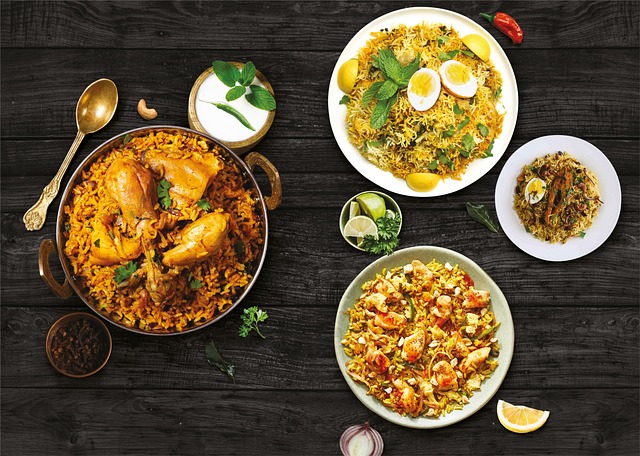
The Royal Pot: A Comprehensive Guide to Biryani
If there is one dish that unites the diverse culinary landscape of the Indian subcontinent, it is Biryani. It is not merely a dish; it is an emotion, a centerpiece of celebration, and a subject of intense debate among food lovers. From the royal kitchens of the Mughals to the bustling streets of Hyderabad and Kolkata, Biryani has evolved into arguably the most popular dish in South Asia.
Below is an extensive guide presented in a Question-and-Answer format to help you understand the depth, history, and culinary mastery required to create this masterpiece.
Q: What is the history of Biryani and where did it originate?
The history of Biryani is a fascinating journey that crosses borders and centuries. While it is now synonymous with Indian cuisine, its roots are firmly planted in Persia (modern-day Iran).
The word “Biryani” is derived from the Persian word “Birian,” which means “fried before cooking,” and “Birinj,” the Persian word for rice. Historically, rice was fried in ghee (clarified butter) before being boiled with water to ensure the grains did not clump together—a technique still used in some variations today.
There are several theories regarding how Biryani arrived in India:
- The Timur Invasion (1398): Some historians believe that Turco-Mongol conqueror Timur brought the precursor to Biryani to India. His army’s diet consisted of an earthen pot filled with rice, spices, and whatever meat was available, buried in a hot pit to slow cook. This was the primitive form of the “Dum” cooking style.
- The Mughal Era: The most popular theory attributes the dish to the Mughals. It is said to have been developed in the royal kitchens (Khansama) of the Mughal Emperors, blending Persian pilaf with the spicy, aromatic flavors of India.
- The Mumtaz Mahal Legend: A famous folklore suggests that Mumtaz Mahal (the queen for whom the Taj Mahal was built) once visited the army barracks. She found the Mughal soldiers looking undernourished. She ordered the chefs to prepare a dish with meat and rice that provided a balanced meal of protein and carbohydrates. The result was Biryani.
Over time, as the Mughal empire expanded, the recipe traveled to different corners of India—Hyderabad, Lucknow, Kolkata, and Mysore—where it absorbed local flavors and ingredients to create the vast variety of Biryani we see today.
Q: What is the specialty of Biryani that makes it different from Pulao?
This is the most common debate in Indian households. While both are rice and meat dishes, the specialty of Biryani lies in its preparation method, specifically the layering technique.
1. Preparation:
- Pulao (Pilaf): In a Pulao, the meat (or vegetables) and rice are cooked together in the same pot with water. The rice absorbs the stock completely. It is usually a one-pot dish where flavors are homogenous.
- Biryani: In authentic Biryani, the rice and the meat (curry) are prepared separately. The rice is par-boiled (cooked to about 70%), and the meat is marinated and cooked (or kept raw in Kachchi style). They are then arranged in layers in a heavy-bottomed pot (Handi).
2. The Dum Pukht Technique:
The true specialty of Biryani is “Dum Pukht,” a slow-cooking method. The pot is sealed with dough to trap the steam (Dum). The dish cooks in its own juices, allowing the aromas of saffron, rose water, and spices to penetrate the rice grains without making them mushy.
3. Spices:
Pulao is generally milder. Biryani is complex and uses a wider array of spices including star anise, mace (javitri), stone flower (dagad phool), saffron, and kewra water, giving it a distinct aroma that Pulao lacks.
Q: How many types of Biryani are there in India?
It is nearly impossible to put an exact number on how many types of Biryani exist because almost every region and community has its own version. However, there are about 15 to 20 distinct, recognized varieties. Here are the most famous ones:
1. Hyderabadi Biryani:
The undisputed king of Biryanis. It originated in the kitchens of the Nizam of Hyderabad.
- Profile: Spicy, aromatic, and tangy.
- Key Feature: It has two main sub-types: Kachchi (raw meat marinated with yogurt and spices is layered with raw rice and cooked together) and Pakki (meat and rice cooked separately then layered).
2. Lucknowi (Awadhi) Biryani:
Coming from the city of Nawabs, this is milder and more refined.
- Profile: Delicate, floral, and rich.
- Key Feature: The rice is cooked in meat stock (Yakhni). The focus is on the aroma of the spices (ittar, saffron) rather than chili heat. The texture is softer than the Hyderabadi version.
3. Kolkata Biryani:
A descendant of the Lucknowi style, brought to Kolkata by the exiled Nawab Wajid Ali Shah.
- Profile: Subtle sweetness, light on spices.
- Key Feature: The inclusion of a giant, golden-fried potato and a boiled egg. The potato absorbs the meat juices and is often considered the best part of this Biryani.
4. Malabar / Thalassery Biryani:
Famous in the Kerala region, influenced by Arab traders.
- Profile: Sweet and spicy, rich in ghee.
- Key Feature: It does not use Basmati rice. Instead, it uses a short-grain, aromatic rice called Jeerakasala or Khyma rice. It is garnished with fried cashew nuts and raisins.
5. Sindhi Biryani:
Originating from the Sindh province (now in Pakistan), popular in North India.
- Profile: Very spicy, tangy, and aromatic.
- Key Feature: It uses a lot of dried plums (alu bukhara) and potatoes. The masala is distinctively sour due to the yogurt and tomatoes.
6. Ambur / Vaniyambadi Biryani:
Famous in the Arcot region of Tamil Nadu.
- Profile: Moderate spice, distinct meat flavor.
- Key Feature: Uses Seeraga Samba rice (tiny grains). It is usually served with a brinjal curry (Ennai Kathirikai).
7. Donne Biryani:
A military hotel specialty from Bangalore.
- Profile: Herbal, green color, spicy.
- Key Feature: The masala is green because of mint and coriander paste. It is served in dried palm leaf cups called “Donne.”
8. Memoni Biryani:
Belonging to the Memon trading community of Gujarat and Sindh.
- Profile: Extremely spicy and rich.
- Key Feature: It uses lamb exclusively and very few food colorings, relying on the natural dark color of the caramelized onions and meat.
Q: What ingredients are essential for a good Biryani?
To understand the variety of Biryani, one must understand the building blocks. The ingredients are what separate a mediocre dish from a royal feast.
- Rice: Long-grain, aged Basmati rice is preferred for most North Indian varieties (Hyderabadi/Lucknowi) because it stays fluffy and absorbs aroma. Southern varieties often use local short-grain aromatic rice.
- The Barista (Fried Onions): Thinly sliced onions fried until golden brown. These provide a sweet, caramelized crunch and color to the dish.
- The Acid: Yogurt (Curd) is essential for marinating the meat; it tenderizes the protein. Tomatoes and lemon juice are also used in specific regional variations.
- Whole Spices (Khada Masala): Bay leaf, green and black cardamom, cloves, cinnamon, and star anise.
- Aromatics: Saffron (kesar) soaked in warm milk gives the rice its signature yellow streaks and earthy scent. Kewra water (screwpine) and Rose water provide the floral nose.
- Fat: Ghee (clarified butter) is non-negotiable for an authentic taste.
Q: How to make Biryani at home? (A Step-by-Step Guide)
How to make Biryani can be intimidating due to the multiple steps. Below is a simplified “Dum” method for a classic Chicken Biryani that balances the Hyderabadi and North Indian styles.
Ingredients:
- 500g Chicken (bone-in, curry cut)
- 2 cups Long Grain Basmati Rice
- 1 cup Fried Onions (Barista)
- 1 cup Yogurt (whisked)
- 2 tbsp Ginger-Garlic Paste
- Whole Spices (Cardamom, Clove, Cinnamon, Bay leaf)
- Mint and Coriander leaves (chopped)
- Saffron milk
- Ghee and Oil
- Salt, Red Chili Powder, Turmeric, Garam Masala/Biryani Masala.
Step 1: Marination (The Foundation)
In a large bowl, mix the chicken with ginger-garlic paste, yogurt, half of the fried onions, salt, chili powder, turmeric, chopped mint/coriander, and 1 tbsp of oil.
- Tip: Let this sit for at least 4 hours, or preferably overnight in the fridge. The longer it sits, the tenderer the meat.
Step 2: Cooking the Meat (The Gravy)
Heat ghee in a heavy pot (Handi). Add the marinated chicken. Cook on medium heat.
- Note: You don’t need to add water as the chicken and yogurt will release moisture. Cook until the chicken is 80% done and the oil separates. The gravy should be thick, not watery.
Step 3: Preparing the Rice (The Texture)
Wash the rice gently and soak it for 30 minutes.
Boil a large pot of water. Add salt (the water should taste like sea water) and whole spices (bay leaf, cardamom, shahi jeera).
Add the soaked rice to the boiling water.
- Crucial Step: Cook the rice only until it is 70% done. The grain should be long but still have a hard bite in the center. Drain the water immediately.
Step 4: The Layering (The Art)
In the heavy pot containing the cooked chicken gravy:
- Spread the chicken evenly at the bottom.
- Add a layer of chopped mint and coriander.
- Gently spread the 70% cooked rice over the chicken. Do not press it down; keep it airy.
- Top with the remaining fried onions.
- Pour the saffron milk and a generous drizzle of melted ghee over the rice.
Step 5: The Dum (The Magic)
Seal the pot. You can use aluminum foil to cover the top tightly and place the lid over it, or use wheat dough to seal the edges of the lid to the pot.
Place the pot on a “Tawa” (flat griddle) over low heat. Direct fire might burn the bottom.
Cook on “Dum” (steam) for 20 to 25 minutes.
Turn off the heat and let it rest for another 15 minutes. Do not open the lid immediately.
Step 6: Serving
Open the lid and inhale the aroma. Gently fluff the rice from the side (do not mix vigorously) to get a mix of white rice, yellow saffron rice, and the masala-coated meat.
Q: Is Vegetarian Biryani a real thing?
This is a controversial topic in the culinary world. Purists argue that Biryani must contain meat and that the vegetable version is simply a “Pulao.”
However, from a technical culinary standpoint, Vegetarian Biryani is real if it follows the Biryani cooking method.
If you cook a spicy vegetable curry separately, par-boil the rice separately, layer them, and cook them on Dum with saffron and fried onions, it is technically a Vegetable Biryani.
The difference lies in the technique (Dum layering) rather than just the ingredients. In Hyderabad, “Tahari” is a common name for a vegetarian rice dish, but restaurants widely serve Vegetable Biryani using the authentic layering method to satisfy vegetarians who crave those specific flavors.
Q: What are the best side dishes to eat with Biryani?
Biryani is flavorful enough to be eaten alone, but specific accompaniments enhance the experience.
- Mirchi Ka Salan: A staple with Hyderabadi Biryani. It is a curried chili and peanut sauce that is tangy, spicy, and nutty. It balances the dryness of the rice.
- Raita: A yogurt-based side dish. Common varieties include Cucumber Raita, Boondi Raita, or Onion-Tomato Raita. The cooling effect of yogurt cuts through the spice and grease of the Biryani.
- Kachumber: A simple salad of chopped onions, tomatoes, cucumbers, and lemon juice.
- Boiled Egg: In Kolkata and some Hyderabadi versions, a boiled egg is essential.
- Shammi Kebab: Soft minced meat patties are often served as an appetizer alongside the main rice dish.
Q: Why is Biryani considered a “Complete Meal”?
Nutritionally and gastronomically, Biryani is a powerhouse.
- Carbohydrates: Provided by the rice.
- Protein: Provided by the meat (Chicken, Mutton, Fish) or Paneer/Legumes in veg versions.
- Fats: Provided by Ghee and oil.
- Vitamins: The onions, garlic, ginger, and herbs provide micronutrients.
Because it contains all macronutrients in one pot, it was historically the perfect meal for soldiers on the move and remains a favorite for large gatherings today because you don’t need to cook multiple side dishes.
Q: What is the difference between Kachchi and Pakki Biryani?
This distinction is most prominent in Hyderabadi cuisine.
- Kachchi (Raw): This is the more difficult and prestigious method. Raw marinated meat is placed at the bottom of the pot, and raw (or very slightly soaked) rice is layered on top. They cook together. The challenge is timing it so the meat is tender exactly when the rice is fluffy. If you get it wrong, you get undercooked meat or mushy rice.
- Pakki (Cooked): The meat curry is fully cooked, and the rice is almost fully cooked. They are layered and steamed for a short time just to meld flavors. This is the safer method for beginners asking how to make Biryani.
Q: Why is the “Handi” (Pot) important?
The vessel plays a crucial role. A traditional Biryani handi is wide at the bottom and narrow at the top (lagan or degh).
- Thick Bottom: Prevents the meat from burning during the long, slow cooking process.
- Narrow Neck: Reduces the surface area for steam to escape, making it easier to seal for the Dum process.
- Material: Copper or brass pots (Kalai) are traditional because they conduct heat evenly. Clay pots are also popular for the earthy flavor they impart.
Q: Conclusion: Why does the world love Biryani?
Biryani is more than just food; it is a celebration of patience. In a world of fast food, Biryani demands time. It demands high-quality saffron, the perfect cut of meat, and the patience to let the rice soak and the onions caramelize.
Whether you prefer the spicy kick of a Sindhi Biryani, the potato-laden comfort of a Kolkata Biryani, or the aromatic subtlety of a Lucknowi creation, there is a version for every palate. Understanding the history, the types of Biryani, and the technique of how to make Biryani elevates the eating experience from a simple meal to a culinary journey.
So, the next time you lift the lid off a steaming pot of Biryani, take a moment to appreciate the centuries of history, the migration of cultures, and the intricate science of steam and spice that made that bite possible.